ISSUE 75 | APRIL 2025
AN OFFICIAL NEWSLETTER OF THE FEDERATION OF UGANDA EMPLOYERS
FUENEWS
THE VOICE OF EMPLOYERS
FUE CEO MESSAGE

Dear Esteemed Member,
According to the Sustainable Development Report 2024, Uganda ranks 142 out of 166 countries with an SDG index score of 56.13%. This report is a global assessment of countries’ progress towards achieving the Sustainable Development Goals (SDGs) by 2030. This rank is an indication of slight progress achieved in attaining the SDGs hence the need to increase efforts and strengthen initiatives aimed at advancing sustainable growth in Uganda.
As the sole Employers organisation in Uganda, FUE participated in an informative panel discussion during the Private Sector Executive Breakfast Meeting, a high-level engagement of the Africa Regional Forum on Sustainable Development (AFRSD) organised by Global Compact Kenya to address the theme, ‘Sustainability: A Business Imperative’. The key take-aways from the event included the significance of responsible business conduct and the role of business leaders in championing sustainability to drive lasting impact. These engagements are significant to develop professional networks at regional level to benchmark best business practices and share valuable insights to advance the Employers’ fraternity.
In the same vein, we attended the SDG Activation Day organised in preparation of the 11th session of the ARFSD themed, “Driving job creation and economic growth through sustainable, inclusive, science and evidence based solutions for the 2030 Agenda and Agenda 2063’. The AFRSD is one of the three mechanisms mandated to follow up on, review and catalyse action to achieve the SDGs. We believe this platform provides an opportunity to share best practices and progress on achieving sustainable growth.
Additionally, in line with our policy and advocacy efforts, we participated in the 3rd Annual National Labour Convention hosted by the Ministry of Gender, Labour and Social Development (MGLSD). This high-level engagement brings together tripartite partners, policy makers and development partners to advance economic growth. The main focus of the discussions evolved around legal compliance, decent work and inclusive growth at national level. These engagements are aimed at creating synergies between relevant stakeholders to create a conducive work environment in the evolving labour market.
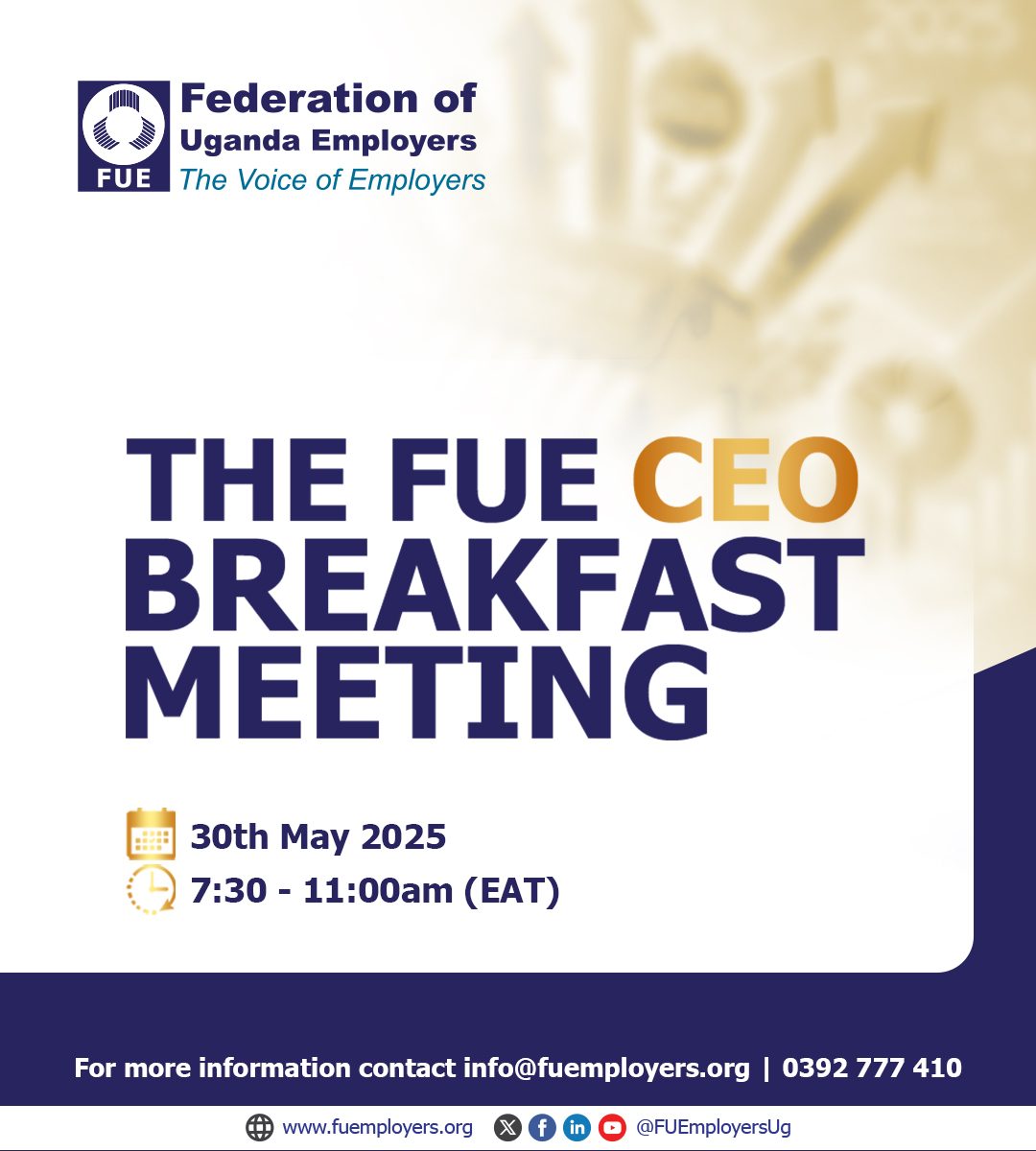
Save the date for the FUE-CEO Breakfast Meeting slated for Friday 30th May 2025 from 7:30am(EAT).
Thank you,
Together for Employers.
Douglas Opio
The Chief Executive Officer, FUE
CONTENTS
- FUE CEO Message
- The Annual National Labour Convention 2025
- The Private Sector Executive Breakfast Meeting
- Employment Essentials for Managers Training
- FUE-BMU Webinar: The Future of Women’s Economic Empowerment
- Industrial Court Case Summary
- FUE New Member Alert
- FUE Staff Commentary
- Upcoming Events

THE ANNUAL NATIONAL LABOUR CONVENTION 2025
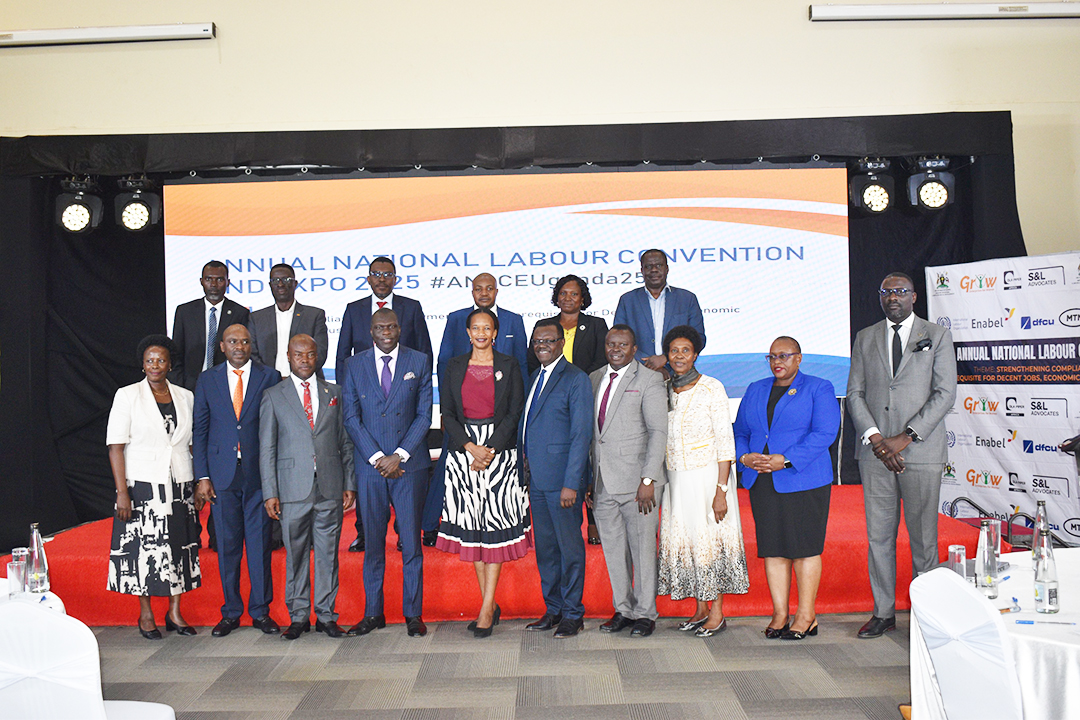
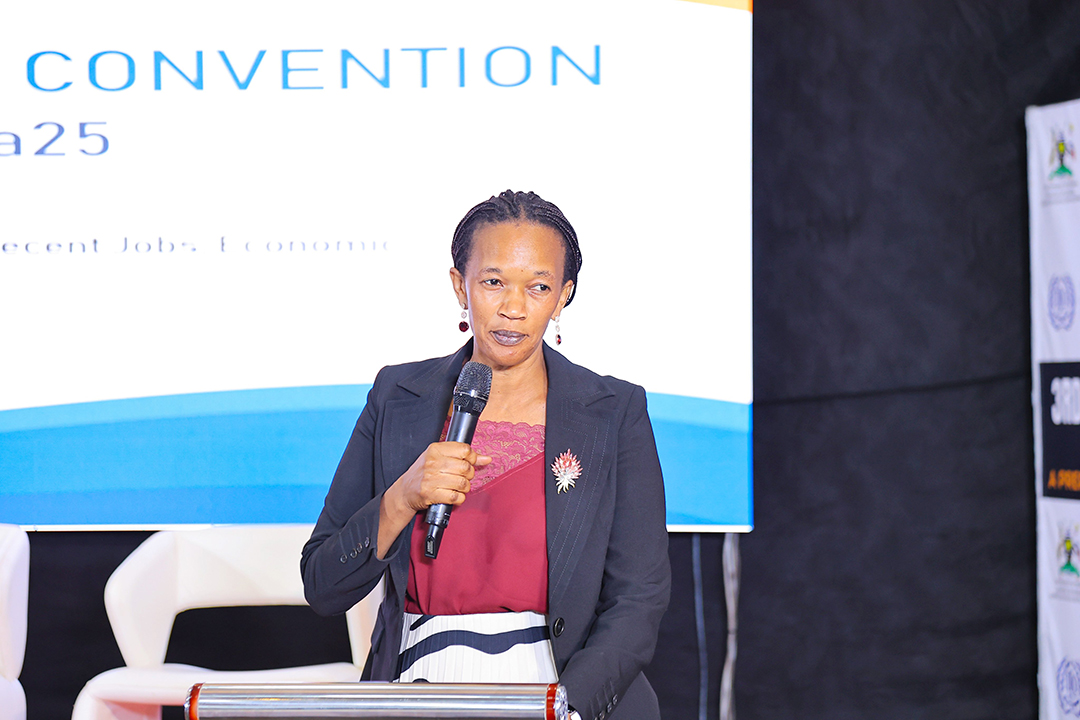
As a key stakeholder on labour and employment matters, we participated in the 3rd Annual National Labour Convention from 23rd to 24th April 2025. The theme of the convention was, ‘Strengthening Compliance to Employment Law: A Prerequisite for Decent Jobs, Economic Empowerment and Inclusive Growth.’ Participants included policymakers, employers, workers and development partners. The main aim of the convention is to discuss employment governance legal compliance and workers rights.
Our Chief Executive Officer, Mr. Douglas Opio in his speech highlighted the inclusion of labour and employment in budget discussions featured in National Development Plans with a focus on job creation. He reiterated the benefits of compliance such as labour productivity, inclusive growth, collaboration and dialogue. Mr. Opio appreciated the Government and the ILO for their technical support and commitment to support Employers through various initiatives and developing the capacity of the industrial court.
Employers are called upon to take collective responsibility to build fair, safe and future-ready workplaces. We remain committed to promoting decent work for all in collaboration with tripartite partners and other relevant stakeholders.
In order to recap the convention proceedings, click the link below:
THE PRIVATE SECTOR EXECUTIVE BREAKFAST MEETING
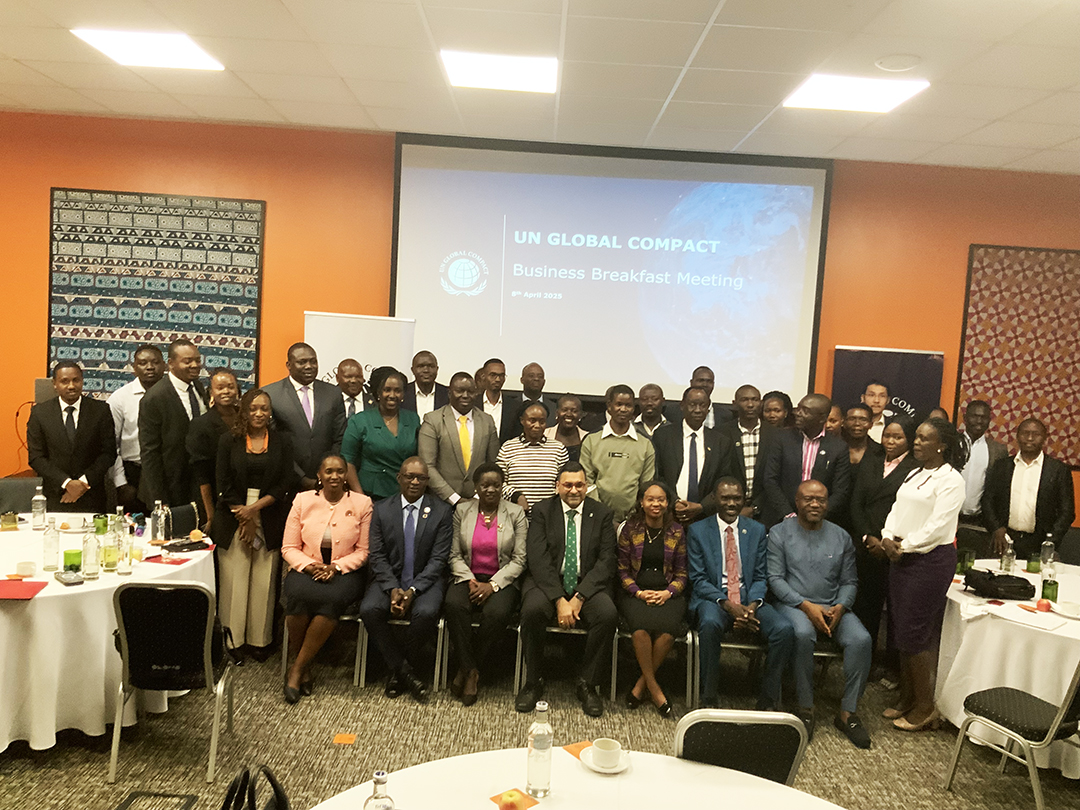
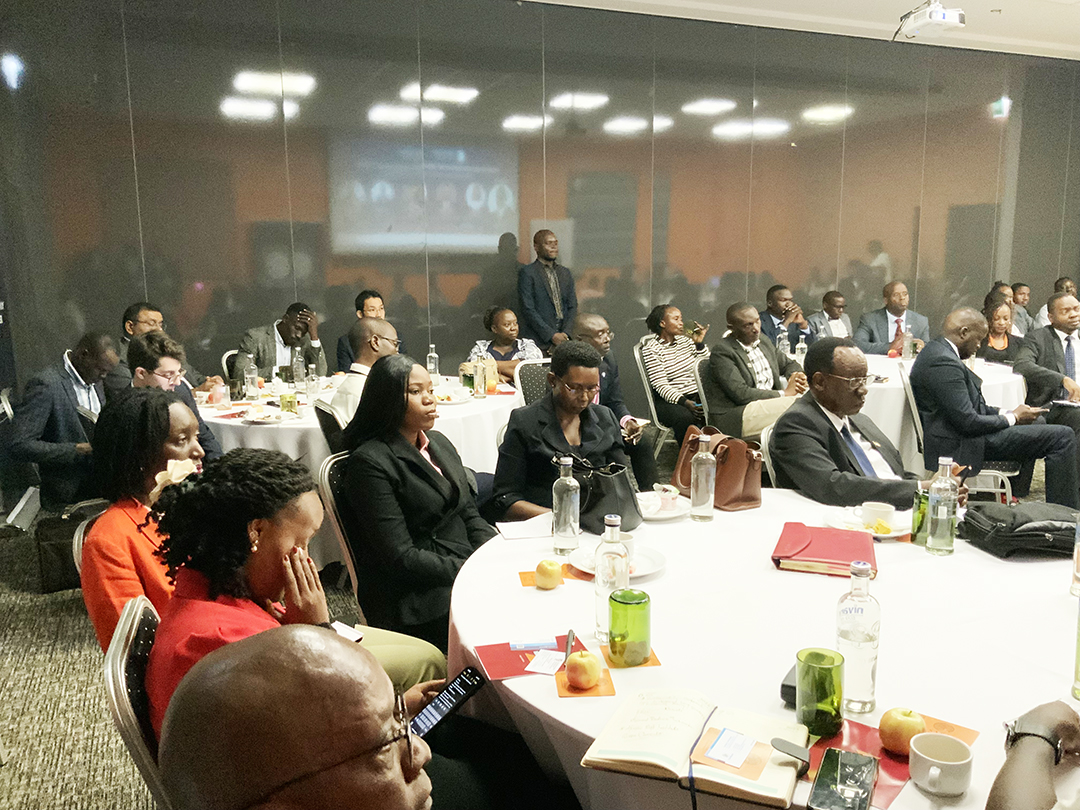
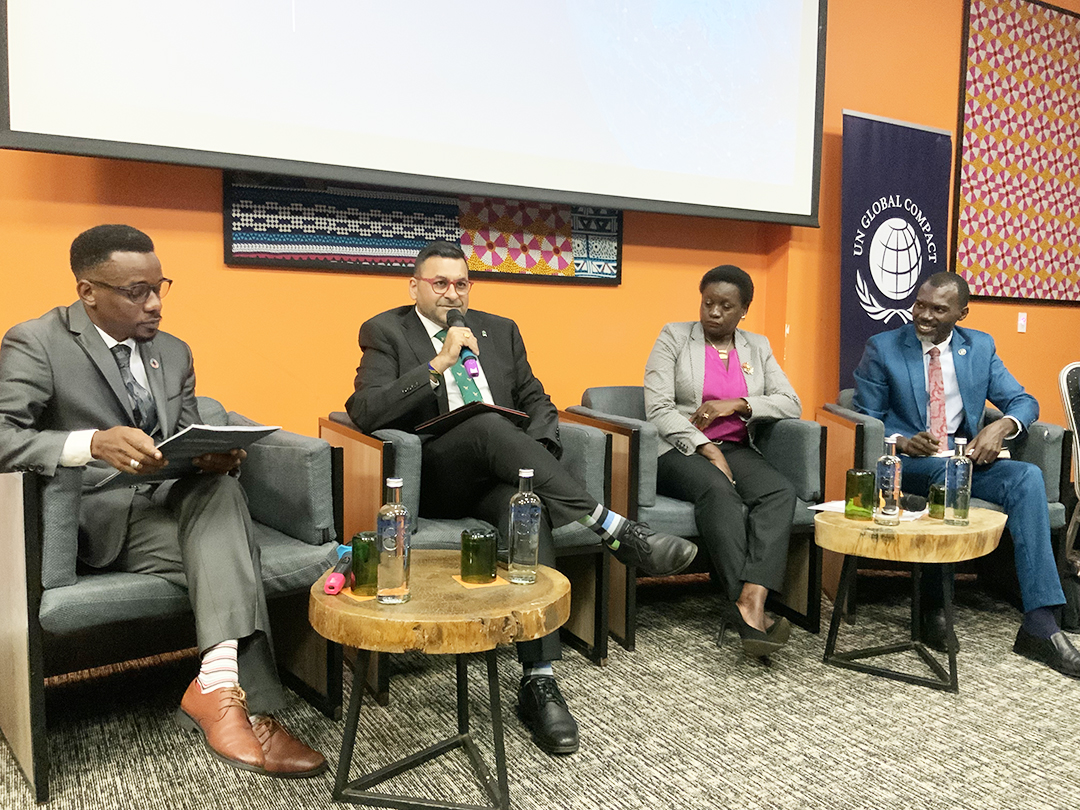
On Tuesday 8th April, FUE members participated in the Private Sector Breakfast Forum under the theme ‘Sustainability: A Business Imperative’. The meeting organised by the Global Compact Network Kenya was convened at Onomo Hotel from 7:30am(EAT). Our Chief Executive Officer, Mr. Douglas Opio represented as a panelist at the event.
During the meeting, Mr. Opio reiterated the need to create a culture of responsibility around sustainability in business by applying the ERIC model. He recommended recognising and rewarding sustainability champions within the organisation. Furthermore, other speakers shared valuable insights and real-world case studies demonstrating how intergrating sustainability is enhancing resilience and serving as a catalyst for trade, profitability and competitiveness.
Additionally, this forum is part of the Leadership in Action Series, designed to equip business leaders with practical insights on responsible business practices while fostering meaningful networking opportunities with like-minded peers driving sustainable change. The forum proceeded the SDG Activation Day.
We encourage Employers to adopt sustainable business practices in daily work operations to excel in the evolving labour market.
EMPLOYMENT ESSENTIALS FOR MANAGERS TRAINING
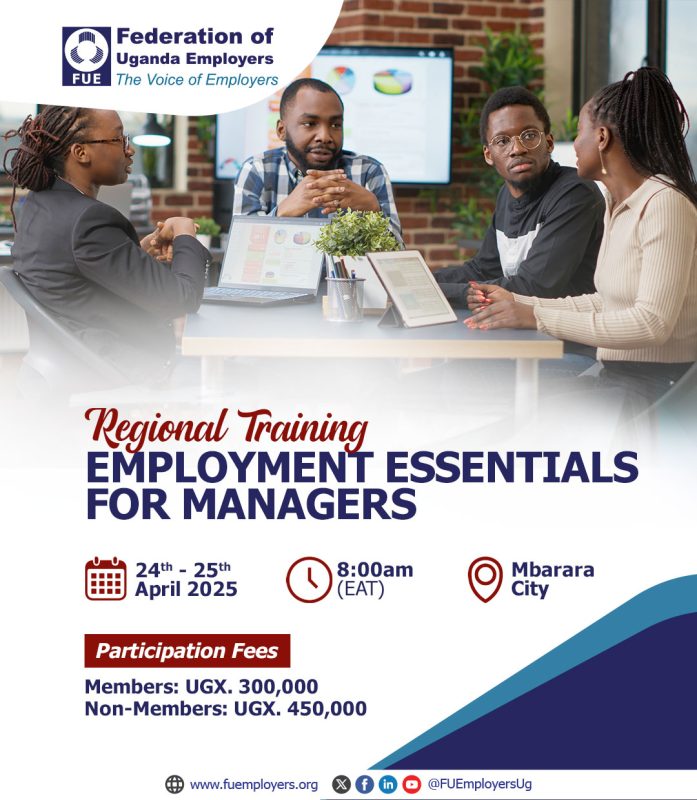
On 24th to 25th April 2025, we conducted a regional training themed, ‘Employment Essentials for Managers’. The training was convened at Oxford Inn Hotel, Mbarara City. This comprehensive training aims to equip business leaders with the knowledge and practical skills to navigate Uganda’s labour laws, manage employees effectively, and handle workplace issues in compliance with legal frameworks.
The training entailed insights on legal compliance, efficient recruitment and onboarding, performance management, good employment relations, conflict resolution and workplace harmony. Participants had the opportunity to understand the labour laws, execute lawful termination processes and the need to manage employee rights, workplace policies in compliance with legal standards. Furthermore, Employers had opportunity to share and benchmark best business practices in addition to forming professional networks.
Its significant to ensure an organisation has a well-managed workforce to advance business growth. We remain committed to supporting Employers build strong entities.
FUE-BMU Webinar: The Future of Women’s Economic Empowerment
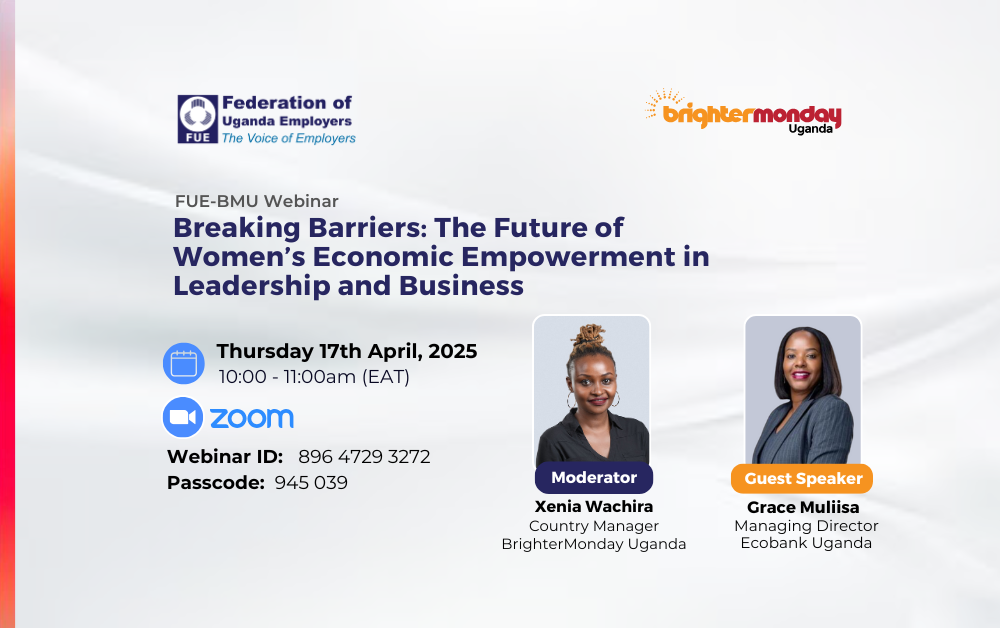
In Uganda, women make up more than half of the population, 46% of whom constitute Uganda’s labour force. We conducted a webinar on Thursday 17th April 2025 in partnership with BrighterMonday Uganda(BMU) for an informative webinar themed, ‘Breaking Barriers: The Future of Women’s Economic Empowerment in Leadership and Business’. The Guest Speaker was Ms. Grace Muliisa, the Managing Director, Ecobank Uganda.
During the webinar, Employers were implored to champion policies, initiatives and best practices that empower women in the workplace. There were recommendations to address bridging the gender gap and differences in packages given for the same role. In addition, the discussion was significant to boost financial literacy and investment opportunities to advance economic opportunities for women.
As we work towards achieving Gender Equality, we are keen on ensuring women in the workplace have access to equal opportunities to level the plane in the evolving labour market. Together, we can create a more inclusive and equitable job market.
Industrial Court Case Summary
Our Employment Relations and Legal Team is committed to represent FUE members at the industrial court hence the need to share conclusions of pertinent issues handled by the court for the benefit of Employers.
Kindly click the link to view the Case Summary of Eseza Byakika vs NSSF.
For support on legal matters, contact us on info@fuemployers.org | 0392 777 410.
FUE NEW MEMBER ALERT
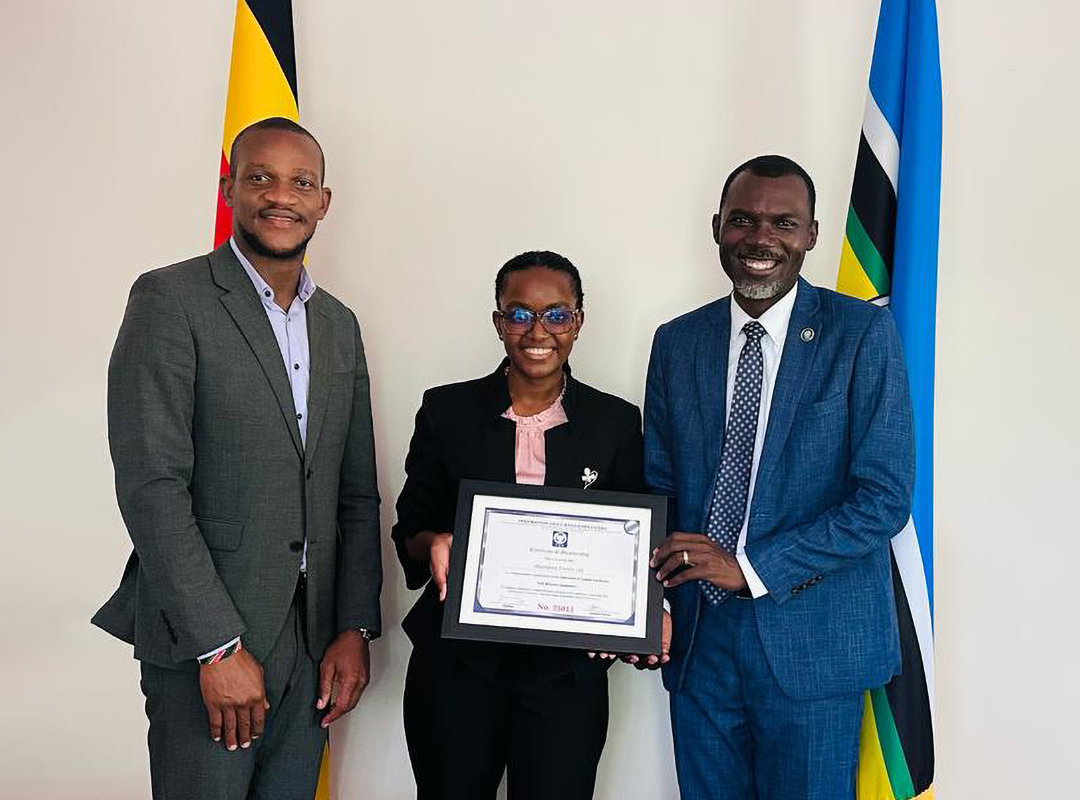
We warmly welcome Machame Energy Ltd to the FUE family. Machame Energy Ltd is an innovative energy production company at the forefront of East Africa’s energy transition focused on delivering renewable energy projects that drive sustainable development and provide affordable grid solutions.
If you are an FUE member, ensure to fully utilise membership benefits under your stipulated membership category. For inquiries contact info@fuemployers.org | 0392 777 410.
FUE STAFF COMMENTARY
Managers Should Mirror Workplace Values
“What you want to ignite in others must first burn inside yourself”, says Charlotte Bronte, the famous English novelist. While Albert Schweitzer, a German theologian, physician, humanitarian and Nobel Prize Lauret says, “Example is not the main thing in influencing others. It is the only thing”. Indeed, the behaviours and values of managers set the tone for their teams and organisation.
Nearly every organisation has a list of core values which reflect the ethos of its founders. Core values are more than just words on a mission statement but things that shape your organisation’s culture and business strategy. According to the Harvard Business School’s Business Insights (2023), core values communicate your business’s larger purpose and inspire and guide employee behaviour.

Core values in a workplace are related to personal values but they somehow differ. While personal values influence your motivations in and outside of work, workplace core values are shared and predetermined values that directly correlate with its business strategy.
Workplace core values often define an organization’s culture, ethics, and overall purpose, serving as a foundation for both personal and professional conduct. They also double as the definition of the workplace culture. And in many ways, workplace core values and culture are synonymous. They are both about the higher aspirations of an organisation (Firstup, 2025).
Jahnavi Pulluri (2024) defines core values as the fundamental beliefs, principles, or standards that guide an individual, organization, or group in making decisions, setting goals, and interacting with others. These values reflect what is considered important and act as a compass for behaviour, shaping actions and attitudes in various situations. Some of the common workplace core values include; Trustworthy, honesty, collaboration, teamwork, integrity, professionalism, excellence, innovation, accountability, responsibility, hard work, adaptability and respect.
Core values can inform how people interact (humility, respect, honesty), the focus of a person’s or business’ work (ingenuity, creativity, data-driven) or the individual responsibilities one holds (consistency, quality and reliability). Core values drive behaviour and decision-making (Hanne Keiling, 2025).
According to Jonathan Mills (2018), an established set of core values benefits to an organisation both internally and externally in the following ways:
- Core values provide a platform and the basis upon which to make decisions. For instance, if quality is a value, then defective products or services will get eliminated.
- Upholding and conforming to the core values ensures maintenance of dignity and a culture of respect.
- Core values have the ability to inform potential clients what you stand for and the tenets upon which the potential relationship will be based.
The most important of the workplace core values is trustworthy. Trustworthy is an essential component of any successful organization. According to the British English, the synonyms of ’trustworthy’ are; dependable, reliable, honest, truthful, trusty, righteous, ethical, upright, honourable, reputable, responsible, to be trusted, sensible, principled etc.
The study conducted by a consulting firm ‘Great Place to Work’ found out that companies with high-trust cultures report stock market returns that are two to three times higher than the market average, have turnover rates that are 50 percent lower than industry competitors and generate increased levels of employee engagement, innovation, and satisfaction.
However, trust is very delicate. It is earned and not just a free thing. Amy Rees Anderson, a successful entrepreneur and public speaker counsels: “Trust take years to build, seconds to break, and forever to repair”. Similarly, Donald Trump, the US President, rightly provided two reasons why some people are not trusted. The first reason is because we do not know them. And the second reason is because we know them. Indeed, that’s the reality.
Therefore, trust means everything. It is the ultimate currency which is more valuable than money, fame and power. If you want long term success, build trust and guard it jealously because when you got trust, doors open and opportunities come knocking. Remember, every word or action is either depositing or withdrawing from your trust account.
However, to build a culture of trust, it’s important to lead by example and keep your promises, tell the truth, and encourage open dialogue and debate to solve conflicts. Doing so can inspire your employees to follow suit (Matt Gavin, 2019). When managers walk the talk by embodying workplace’s core values in every aspect of their leadership, and when their actions consistently mirror the declared values, it cultivates a culture of authenticity and trust.
By Patrick Ajuna, Policy and Research Officer
UPCOMING EVENTS
[wpcdt-countdown id=”4350″]