
ISSUE 79 | AUGUST 2025
AN OFFICIAL NEWSLETTER OF THE FEDERATION OF UGANDA EMPLOYERS
FUENEWS
THE VOICE OF EMPLOYERS
FUE CEO MESSAGE

Dear Esteemed Member,
The United Nations set 2025 as the year to end child labour within the framework of the Sustainable Development Goals (SDGs). Despite the progress achieved since 2015, child labour is still a prevalent issue in Africa. According to a joint report from ILO and UNICEF in 2024, global child labour figures showed a concerning reality with 138 million children engaged in child labour, including 54 million in hazardous conditions. These statistics are an indication to accelerate actions to eliminate child labour. Under the ACCEL Africa Project, we hosted a team from the Federation of Kenya Employers (FKE)
for a learning visit to benchmark initiatives applied by FUE that has been implementing the project in Uganda since 2022. The ACCEL project is dedicated to accelerating the eradication of child labour across Africa by focusing on targeted interventions within specific supply chains adopting an innovative systems approach, emphasising the strengthening of existing systems crucial to addressing the root causes of child labour. This availed opportunity to share achievements, challenges and implementation strategies of ACCEL to combat child labour in Uganda. As organisations representing Employers in our respective countries, we look forward to supporting FKE implement the project to end child labour in the East African region.
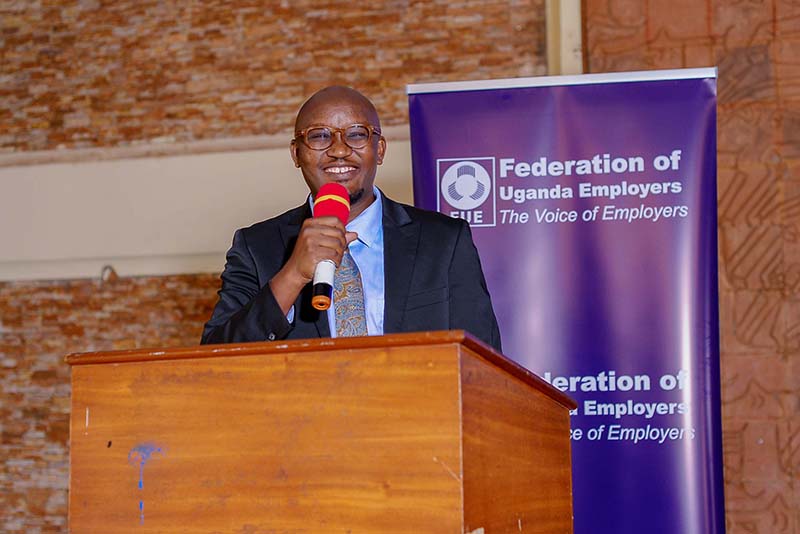
In the same vein, we collaborated with the Danish Industry (DI) to convene a bipartite workshop on Alternative Labour Dispute Resolution (ALDR). The highlight of the workshop was the signing of a Memorandum of Understanding (MoU) with the National Organisation of Trade Unions (NOTU) to solve workplace conflicts amicably as opposed to opting for long court processes that consume time, damage reputation and stall work operations. The workshop also featured an engaging panel discussion to discuss best practices on ALDR from other countries that have adopted the practice. We look forward to a fruitful collaboration with the workers unions and other relevant stakeholders to solve conflicts for a conducive work environment.
Furthermore, the evolving labour market has necessitated the need for Employers to align strategy and corporate culture to thrive in the world of work. In light of the above, we conducted an enlightening CEO webinar on the critical role of organisational culture in driving strategy execution. The training highlighted key aspects of culture often ignored by business leaders that can hinder productivity and growth. In addition, best practices were shared from various companies that have embraced culture as an integral part of business hence efficient service delivery and maximum productivity at all levels. FUE is keen on ensuring business leaders acquire practical skills and valuable insights through capacity building sessions to enhance employer competitiveness at global level.
Save the date for the Annual Women Leadership Conference slated for 24th October 2025.
Thank you,
Together for Employers.
Douglas Opio
The Chief Executive Officer, FUE
CONTENTS
- FUE CEO Message
- FUE Convenes Bipartite Conference On ALDR
- FKE Learning Visit to FUE on ACCEL Africa Project
- Community-Based Health Financing Schemes Guidelines
- The Role of Organisational Culture In Achieving Company Strategy
- Employment Essentials For Managers Training
- FUE New Member Alert!
- FUE Membership Engagement
- Workplace Registration Advertorial
- FUE Staff Commentary
- Upcoming Events

FUE CONVENES BIPARTITE CONFERENCE ON ALDR
According to the judiciary’s annual performance reports, Uganda’s justice system continues to struggle with case backlog, by June 2023, the situation had hardly improved, with 42,960 cases still stuck in the backlog. These statistics demonstrate the need to embrace Alternative Dispute Resolution (ADR) for a more accessible path to justice. On 21st August 2025, we convened a bipartite conference on Alternative Labour Dispute Resolution (ALDR) at Golf Course Hotel in partnership with the Danish Industry(DI). Participants included officials from the Ministry of Gender, Labour and Social Development (MGLSD), workers’ unions representatives, Employers among others.
Mr. Douglas Opio, our Chief Executive Officer in his presentation revealed that resolving cases at the industrial court would take over two years before a hearing date is confirmed hence the need to adopt ALDR to ease the conflict resolution process. He highlighted lack of training and awareness as well as a backlog of cases as hindrances to effective conflict resolution at the workplace. Mr. Opio further shared the recommendations to endorse ALDR as the first option including making it a compulsory practice, embracing technology and digital channels to conduct hearings, partnerships and capacity building for Employers.
During the conference, we signed an MOU with NOTU to collaborate on solving workplace conflicts amicably between employers and employees through ADR to ease dependence on the industrial court. A panel discussion was conducted to share achievements, challenges and best practices of ADR from other countries with panelists including officials from MGLSD, NOTU, DI, Hariss International. The challenges shared were the need to empower labour officers, limited resources and funding, policy gaps as well as missing terms in the Act. Additionally, best practices such as reviewing Collective Bargaining Agreements (CBAs) regularly, sensitising workers, negotiation among others were emphasised.
We advocate for organisations and business leaders to adopt ALDR at the workplace as a cost saving, efficient and better way to solve disputes at the workplace. FUE is keen on supporting Employers through the process.
For ALDR support, reach out to info@fuemployers.org | kabi.geoffrey@fuemployers.org








FKE LEARNING VISIT TO FUE ON ACCEL AFRICA PROJECT
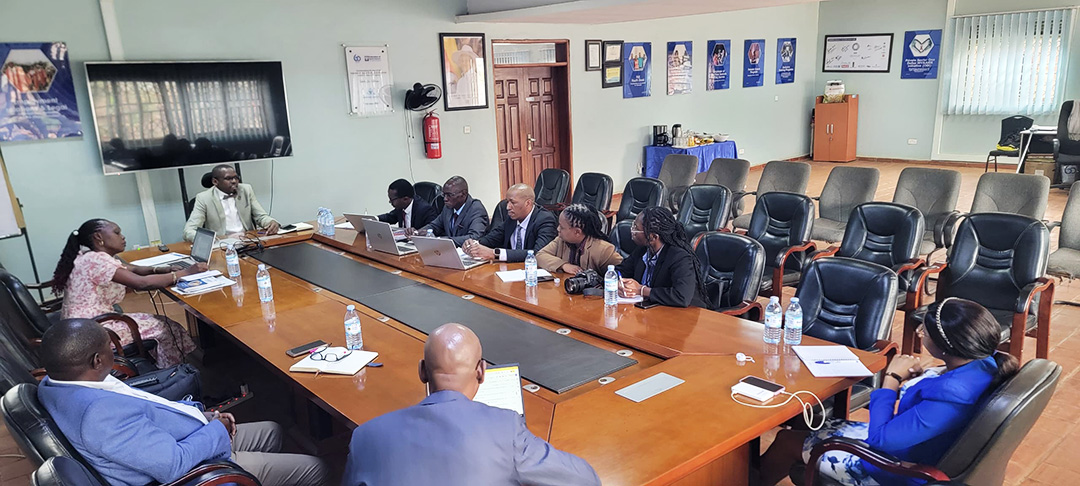
According to statistics from the International Labour Organisation (ILO), over 44.5 million children are involved in child labour in the East African Region accounting for over 30% of statistics in Africa. In view of the above, we were delighted to host the Federation of Kenya Employers (FKE) for a learning visit under the Accelerating Action for The Elimination of Child Labour in Supply Chains (ACCEL) Africa project from 11th to 15th August 2025. The main aim of the learning visit was to inform FKE’s upcoming initiatives to sensitise Employers in Kenya’s tea and coffee sectors on the detrimental effects of child labour and promote sustainable, child-labour free value chains.
The FKE team accompanied by FUE visited farmers from Mcleod Russel Uganda Limited in Hoima where the first phase of the ACCEL project was conducted. They discovered the successes of the project through FUE’s implementation including increased school enrollment and widespread awareness in the community about child labour, its effects and impact on the economy. The farmers’ supervisors shared first hand reports on the strategies that contributed to the projects success, obstacles and areas of improvement.
FKE in partnership with FUE and ILO is keen on taping into the experiences, innovative strategies, good practices to facilitate a process of learning, discussions and reflection towards development of promising implementation strategies towards the ACCEL project in tea and coffee sectors in Kisii, Kericho, Nyeri and Meru Counties in Kenya. We are readily available to support Employers in their quest to elimninate child labour.

COMMUNITY-BASED HEALTH FINANCING SCHEMES GUIDELINES
The global movement towards Universal Health Coverage (UHC) has been gaining momentum, mainly driven by the Sustainable Development Goal three (SDG 3): Good Health and Well-being. This SDG 3 aims to ensure health lives and promote well-being for all the people. Specifically, SDG target 3.8 focuses on achieving Universal Health Coverage. In line with the above, the 1995 Constitution of Uganda provides a legal basis for social protection interventions in Uganda, and the Social Protection Policy, 2025 recognises that Health Insurance Schemes play an important role in protecting households from vulnerability, making them resilient against unexpected catastrophes including ill health.
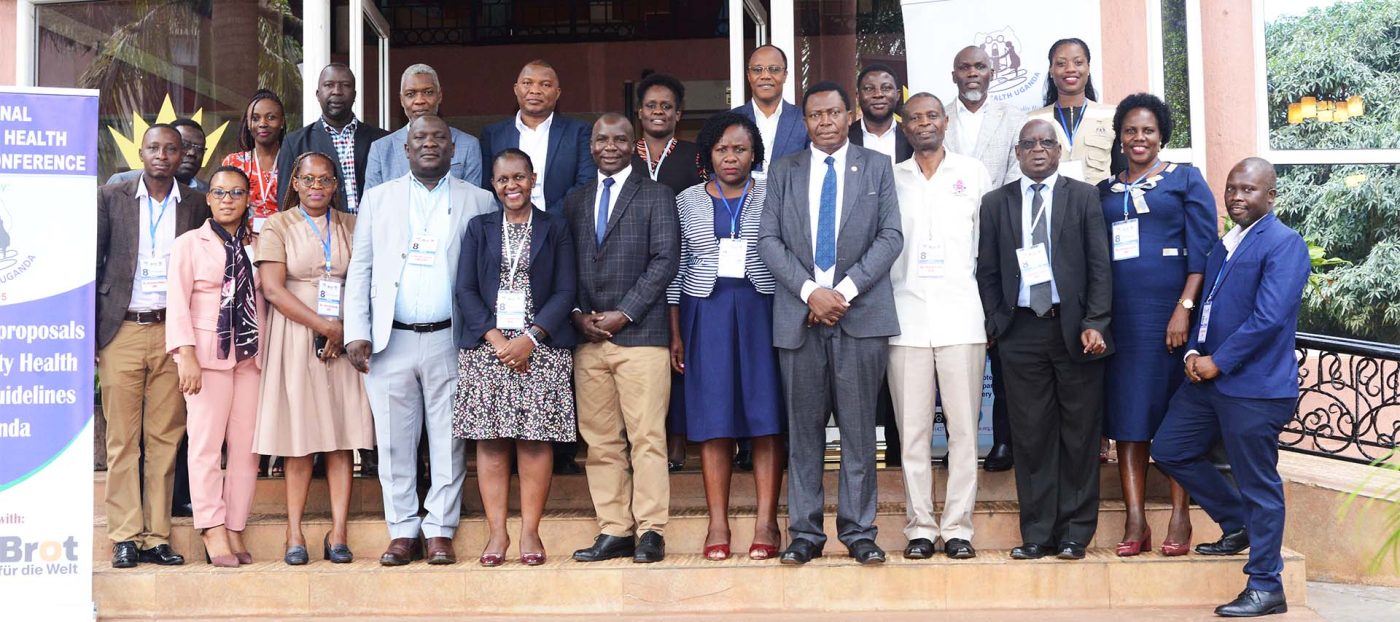
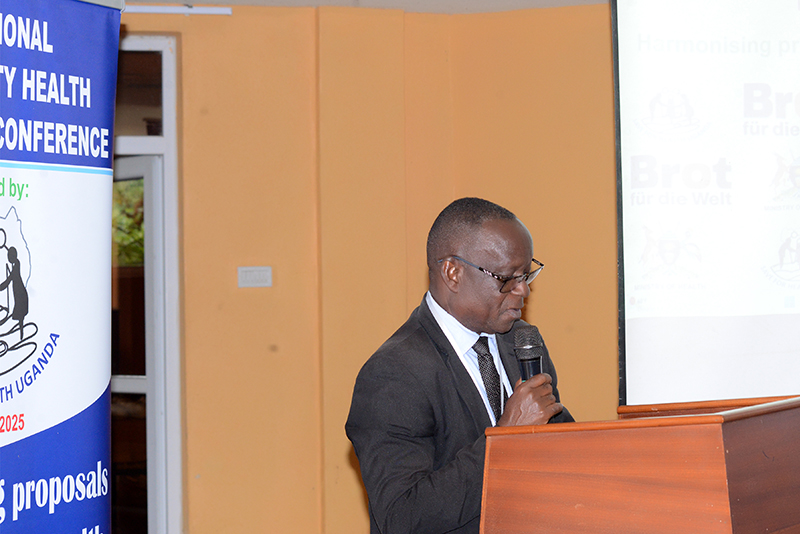
It was against this background that the Ministry of Health (MoH) in collaboration with Save for Health Uganda (SHU) and other partners organised a week-long conference to develop the guidelines for Community Based Health Financing Schemes (CBHFS), and how these CBHFS can be scaled up in the country. The conference was attended by representatives from the Ministry of Health, Save for Health Uganda, Ministry of Gender, Labour and Social Development (MGLSD), Federation of Uganda Employers, Uganda Protestant Medical Bureau, Uganda Health Partners Cooperative, among other stakeholders in the health and social protection sector hosted at Imperial Golf View Hotel, Entebbe from Monday 18th to Friday 22nd August 2025. The aim of the guidelines is to establish regulations and standards of operations of CBHFS in Uganda. These guidelines would facilitate the creation, expansion, management and sustainability of CBHFS that adhere to uniform core principles and operation standards as part of the efforts towards achieving Universal Health Coverage in the country.
The meeting outcomes included;
- The Draft Community-Based Health Financing Schemes Guidelines, and
- The road map for producing the final guidelines, which includes the following processes:
- Presenting the Draft Community-Based Health Financing Schemes Guidelines to the relevant authorities, including the Minister of Health, for approval.
- Organising a stakeholder meeting to launch the guidelines.
- Printing and distributing the final document (CBHFS Guidelines), and
- Organising capacity building workshops and training of stakeholders for the successful implementation of the guidelines, among others.
It’s significant to note that the Ministry of Health Strategic Plan 2020/21–2024/25 places social health insurance and community health insurance as some of the financing mechanisms for the attainment of Universal Health Coverage. However, according to the recent studies, the development of Community Based Health Insurance Schemes (CBHIS) in Uganda is very slow with a very small portion of about 1% of the Ugandan population enrolled in the schemes compared to 26%, 15% and 92.9% coverage of the same schemes in Kenya, Tanzania and Rwanda respectively. Besides, Uganda lacks a specific health protection policy hence the workshop was a momentous milestone in improving the health systems in Uganda.


THE ROLE OF ORGANISATIONAL CULTURE IN ACHIEVING COMPANY STRATEGY
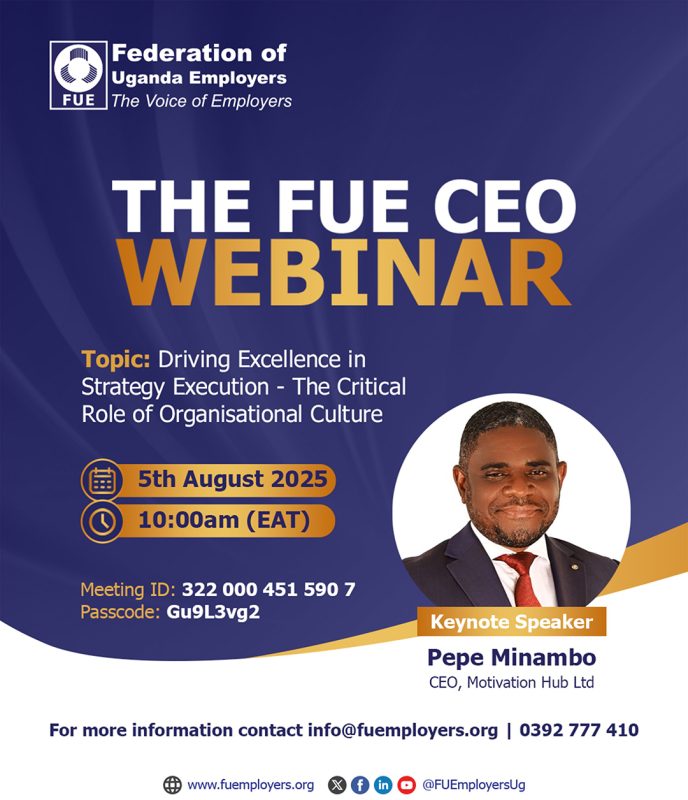
In the world of work, corporate culture is an intergral part of daily operations and is key to strategy implementation. On Tuesday 5th August 2025, we conducted a webinar on, ’Driving Excellence in Strategy Execution-The Critical Role of Organisational Culture’. The keynote presentation was delivered by Mr. Pepe Minambo, the CEO, Motivation Hub Ltd.
In the presentation, Mr. Pepe reiterated the famous saying, ‘Culture eats strategy for breakfast’ to the participants as an indication that organisational culture can determine the success of strategy. He revealed that poor culture can destroy any strategy that has been developed by top management due to negative attitude, limited information and other work issues. Mr. Pepe further encouraged Employers to cascade the strategy to department heads and then individuals to enable everyone find their role and contribution to business growth.
Corporate culture is a powerful force that can significantly impact the execution of an organisation’s strategy. By aligning culture with strategic goals, fostering effective communication, and leveraging the influence of leadership, organisations can create an environment that supports and drives business success.
EMPLOYMENT ESSENTIALS FOR MANAGERS TRAINING
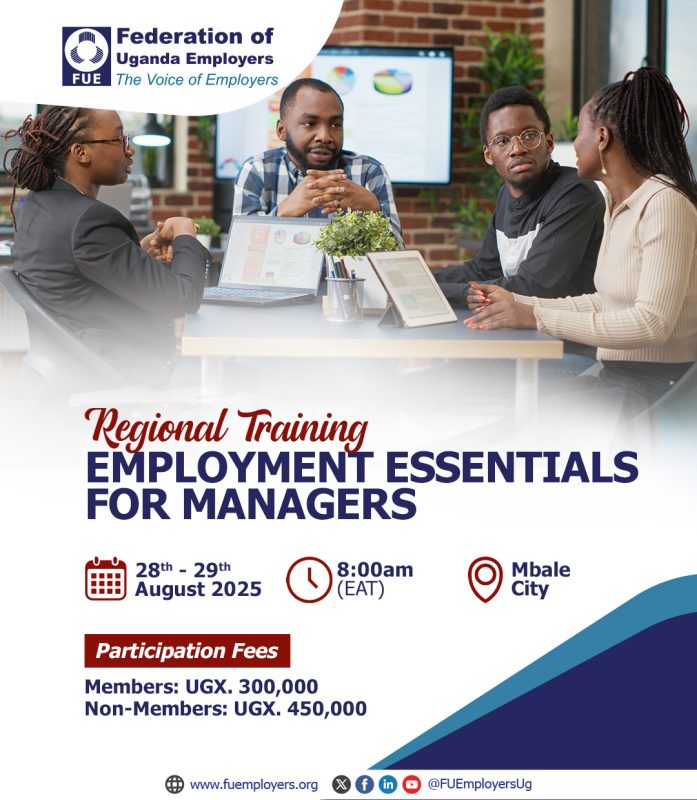
On 28th to 29th August 2025, we conducted a regional training on, ‘Employment Essentials for Managers‘ in Mbale city. The main aim of the training previously convened in Gulu and Mbarara is part of FUE‘ role in supporting regional organisations with essential legal knowledge and practical strategies to manage employment relations effectively, learn how to enhance compliance, mitigate risks, and create a harmonious workplace. Participants included HR Managers and Officers, Senior and Middle-Level Managers, Legal and Compliance Officers, Business Owners and Entrepreneurs as well as Team Leaders & Supervisors.
During the training Employers were given a comprehensive breakdown of the employment and labour laws to ensure compliance with legal frameworks. The need to amicably handle workplace challenges and issues was emphasised for smooth work operations. Participants were further implored to implement fair and effective recruitment, onboarding, and contract management processes to eliminate issues arising out of non-compliant processes.
FUE is keen on ensuring all organisations access and possess requisite knowledge to navigate work challenges efficiently and legally to protect brand reputation, enhance business growth and advance sustainable development.
FUE New Member Alert!
We are delighted to welcome Prudential Uganda to the FUE family. Prudential provides exceptional insurance products and personalised service guiding stakeholders in making informed decisions and safeguarding their future. We look forward to fruitful collaborations to advance the Employers’ fraternity.

FUE MEMBERSHIP ENGAGEMENT
We were delighted to host Smart Applications Ltd, an esteemed FUE member at our head offices in Kiwanga-Namanve. Smart is a leading ICT solutions provider based in Africa offering a wide range of technological solutions to enhance efficiency and trust in various institutions, particularly in the healthcare sector.
The courtesy visit aimed at discussing FUE services including general and customised trainings, employment relations issues in addition to major events such as the EYA Dinner and Annual Women Leadership Conference.
FUE is proudly associated and looks forward to fruitful engagements with the Smart team in future endeavors.

WORKPLACE REGISTRATION ADVERTORIAL
The Occupational Safety and Health (OSH) Act, Cap 231 imposes an obligation on all persons who intend to occupy or use any premises as a workplace, to register the relevant workplaces with the Commissioner for Occupational Safety and Health at the Ministry of Gender, Labour and Social Development (MGLSD).
FUE, as a key stakeholder on labour and employment matters supports Employers in the workplace registration process. The certificate of registration is renewable every three (3) years.
The benefits of workplace registration include;
- Legal Compliance
- Key Requirement to Win Bidding Contracts
- Promoting Safety and Health
- Employee Well-being
Organisations that are not registered pose a risk to human resource and work processes that can destroy brand reputation, increase turnover, limit workforce productivity and lead to court sanctions. Every Good Employer has the mandate to ensure their workplace is registered with the MGLSD.
To request for support in workplace registration, contact our in-house OSH Specialist Henry Sabah, henry.sabah@fuemployers.org

FUE STAFF COMMENTARY
EXUDE PROFESSIONALISM CONSISTENTLY FOR A PRODUCTIVE WORK ENVIRONMENT
“Professionalism is about having integrity, honesty, and sincere regard for the personhood of the customer, in the context of always doing what is best for the business”, says Eric Lippert, an American software engineer and designer of fine programming languages. Similarly, David Maister, a former Harvard Business School professor, American writer and expert on business management practices says, “Professional is not a label you give yourself, but a description you hope others will apply to you”.
Indeed, professionalism is a multifaceted concept that encompasses a range of qualities, behaviours, and mindsets which one must possess to be called a professional. Many experts consider professionalism as the key to success in any field. It is an essential skill not only in business but also in life. And regardless of your profession, it is always important to maintain a professional demeanour and doing your job to the best of your ability (Indeed Editorial Team, 2024).

The word professionalism is often misunderstood. While many people equate professionalism solely to one’s job title or level of expertise, others equate it with the possession of advanced degrees or certifications. However, professionalism goes beyond these factors. At its core, professionalism is about having a deep sense of responsibility, accountability, and respect for oneself and others and to the whole community (Elvin Mahmudov, 2024). In this regard, professionals are known for their reliability, honesty, and commitment to delivering quality work.
Oxford Dictionary defines professionalism as the competence or skill expected of a professional. While Cambridge Dictionary defines it as the combination of all the qualities that are connected with trained and skilled people. According to Kumar Rahul (2023), professionalism is a person’s abilities, competence, and behaviour in a particular profession. And business professionalism entails honouring commitments, producing excellent work, and holding yourself up as an expert. Professionalism therefore focuses on a person’s actions and attitudes.
Emily McCrary-Ruiz-Esparza (2025) provides six pillars of workplace professionalism which are more or less the same as those pillars upheld by Purdue University College of Veterinary Medicine in West Lafayette, Indiana. When one possesses and exudes such qualities, they become worthy of the public’s trust and respect. These include: Respect – treating everyone at workplace with respect; Follow-through, that is, doing what you say you will do; Accountability – being accountable for your actions, words, and the work you do; Punctuality – showing up on time and prepared; Initiative – having the ability to act independently; and Integrity, that is, doing the right thing no matter what. According to the Sun Media Corporation (2025), each of the professionalism pillars has its importance, and when combined they form the basis of a culture based on excellence and dependability.
So, professionalism is an essential skill that promotes efficient and effective service delivery as it encompasses the behaviours, attitudes, and qualities that characterize a professional individual or organisation. According to Studocu, an online platform for students’ study materials (2024), professionalism plays a crucial role in service delivery in the following ways:
- Professionalism in service delivery ensures that customers or clients receive high-quality, reliable, and respectful service, leading to greater satisfaction.
- It fosters trust and credibility in the service provider, as it demonstrates competence, integrity, and a commitment to ethical standards.
- Professionalism in service delivery often leads to more efficient and effective processes, as professionals are typically well-trained, knowledgeable, and focused on achieving positive outcomes.
- Professionalism involves effective communication and strong interpersonal skills, which are essential for delivering services in a respectful, clear, and empathetic manner.
- Professionalism encourages a proactive approach to problem-solving and the ability to adapt to changing circumstances, which are critical for successful service delivery.
In order for a person to truly embody professionalism, one must possess and exude the fore-mentioned qualities and characteristics consistently which are worthy of the public’s trust and respect. And when you exude professionalism in all its aspects, you/ your organisation will stand out among the rest, attract opportunities, and be able to achieve your professional/ organisational goals (Elvin Mahmudov, 2024). Similarly, Emily McCrary-Ruiz-Esparza (2025) stresses that professionalism can go a long way to getting one a job, keeping the job, and be in position to climb the career ladder.
Therefore, professionalism is an integral aspect to quality service delivery as it influences the quality of interactions, the level of trust, and the overall effectiveness of the services delivered. As Frank Tyger, the former writer and editorial cartoonist in the Trenton Times in USA rightly puts it, professionalism is knowing how to do it, when to do it, and in doing it. However, in so doing, we need to always be humble and helpful. It is through such virtues of kindness and humility that will earn you respect since respect as a virtue is earned through one’s actions and behaviour, and not something that can be demanded or forced upon others regardless of your position.
By Patrick Ajuna, Policy and Research Officer
UPCOMING EVENTS
[wpcdt-countdown id=”3860″]
[wpcdt-countdown id=”3113″]