
ISSUE 80 | SEPTEMBER 2025
AN OFFICIAL NEWSLETTER OF THE FEDERATION OF UGANDA EMPLOYERS
FUENEWS
THE VOICE OF EMPLOYERS
FUE CEO MESSAGE

Dear Esteemed Member,
The National Development Plan IV (2025/26-2029/30) is a five-year strategic blueprint to achieve Uganda Vision 2040 focusing on transitioning from a subsistence economy to a modern, prosperous society. NDP IV focuses on key sectors such as agriculture, manufacturing, tourism, ICT, and mining in addition to supporting the private sector to drive growth and create jobs. It also prioritises investments in human capital, infrastructure, and good governance by expanding the industrial base, ensuring productivity gains and integrating a comprehensive gender perspective into job creation
strategies to promote inclusive development. The plan is expected to double Uganda’s Gross Domestic Product(GDP) in the next five years towards the attainment of the 10-fold growth in the next 15 years.
As a key contributor to advancing economic growth at national level, we convened the Employer of the Year Awards (EYA) Dinner to reward outstanding organisations that excelled in the EYA Survey themed, ‘Investing in Uganda’s Future: Employers Fostering Job Creation’. The survey theme was distinct with participants in sectors including agriculture, tourism and hospitality from the Rwenzori and Albertine regions to ascertain the level of employment creation. The three main dimensions measured in the survey were creation of stable jobs, addressing barriers to job growth and focused job strategies. Congratulations to the overall, sectoral and special category winners that excelled in the survey. Special appreciation to all EYA partners and sponsors Enabel, International Labour Organisation(ILO), New Vision, Uganda Insurers Association(UIA), Makerere University and the Danish Family Planning Association(DFPA) for their immense contribution to the success of the awards ceremony. We remain committed to supporting business leaders thrive in the evolving labour market.
At regional level, we participated in the Africa Employers’ Summit 2025 that was convened in Nairobi Kenya themed, ‘Empowering Business to Advance Social Justice’. The summit organised by International Organisation of Employers (IOE), International Labour Organisation (ILO), Business Africa brings together employer organisations, business leaders, policy makers and development partners to discuss the future of work in Africa. The key aspects of discussion were enterprise growth, social justice and inclusive development at continental level. The debates, panel discussions, plenary sessions and group discussions provided opportunities to share best practices, deliberate on youth employability, discuss social protection initiatives and creating a conducive environment for sustainable growth.
We are readily available to serve Employers interests and needs in partnership with various stakeholders at national, regional and international level that are significant to achieving our mission to enhance employer competitiveness through policy, advocacy, provision of business support services, fostering sustainable employment relations and job creation. Let’s keep flying the Employers’ flag high!
Thank you,
Together for Employers.
Douglas Opio
The Chief Executive Officer, FUE
CONTENTS
- FUE CEO Message
- The Employer Of The Year Awards (EYA) Dinner 2025
- The Africa Employers Summit 2025
- The Women In Leadership Course 2025
- Disability Inclusion Awareness Training
- Anti-Sexual Harrassment at the Workplace Training
- FUE Staff Commentary
- Upcoming Events

THE EMPLOYER OF THE YEAR AWARDS (EYA) DINNER 2025

As Uganda accelerates towards Vision 2040 and its ambitious goal of a $500-billion economy, employment creation is an integral part to attain this vision. The Employer of the Year Awards (EYA) Dinner was convened on 11th September 2025 at Mestil Hotel Kampala. The EYA Dinner is an awards ceremony to reward outstanding Employers fostering job creation to advance economic growth at national level. The Chief Guest was Hon. Esther Anyakun, Minister of State for Gender, Labour and Social Development (Labour, Employment and Industrial Relations) with other dignitaries including the Belgian Ambassador Hugues Chantry.
Mr. Douglas Opio, Our Chief Executive Officer FUE reiterated the focus of the EYA survey on job creation in line with the National Development Plan (NDP) 4 to create over 880,000 jobs annually to eliminate unemployment. He emphasised the need for all Employers across all sectors and regions to advance decent work and contribute to sustainable development efforts through participating in initiatives like the EYA survey to measure progress. He appreciated the EYA partners and sponsors including the Ministry of Gender, Labour and Social Development (MGLSD), Enabel, International Labour Organisation (ILO), Vision Group, Makerere University, National Union of Disabled Persons of Uganda, Danish Family Planning Association and Uganda Insurers Association (UIA) for their immense contribution to the success of the awards ceremony.
The Lead EYA Survey Consultant, Prof. Julius Kikooma highlighted the need to curb the high rates of unemployment in Uganda to absorb the growing number of graduates churned out of universities. He applauded organisations investing in job creation strategies including human resource strategies, talent management, diversity and inclusion and elimination of child labour while upholding best business practices.
Congratulations to the EYA Winners 2024/25
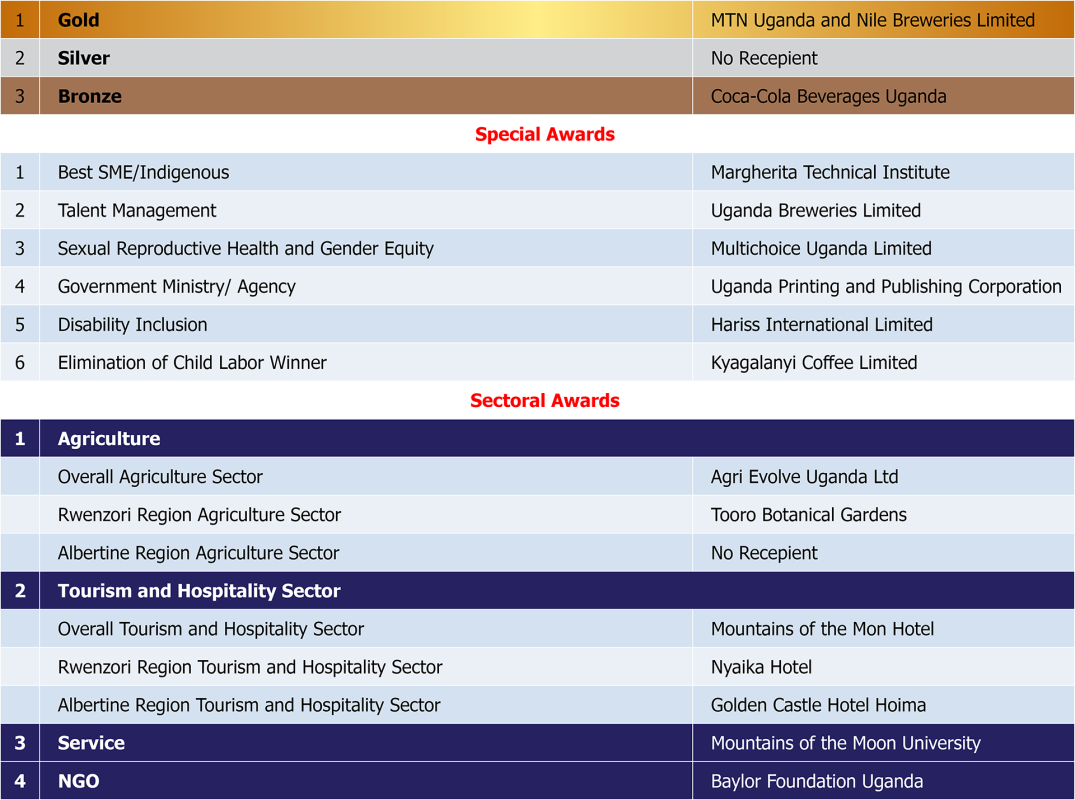
Over the years, FUE has conducted the EYA survey to amplify and recognise best business practices in the world of work. The EYA 2024/25 survey was unique focusing on job creation as a significant part of economic growth. We applaud all Employers that participated in the survey process and those that emerged winners in various categories.
Click the video in the link to recap the EYA Dinner proceedings: The Employer of the Year Awards (EYA) Dinner 2025 – YouTube
https://www.youtube.com/live/ZOE5w_9TRZI
















THE AFRICA EMPLOYERS SUMMIT 2025
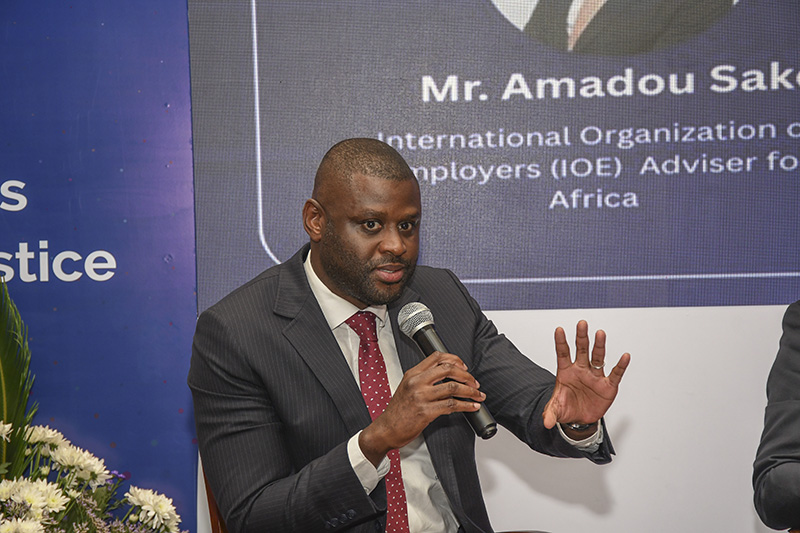
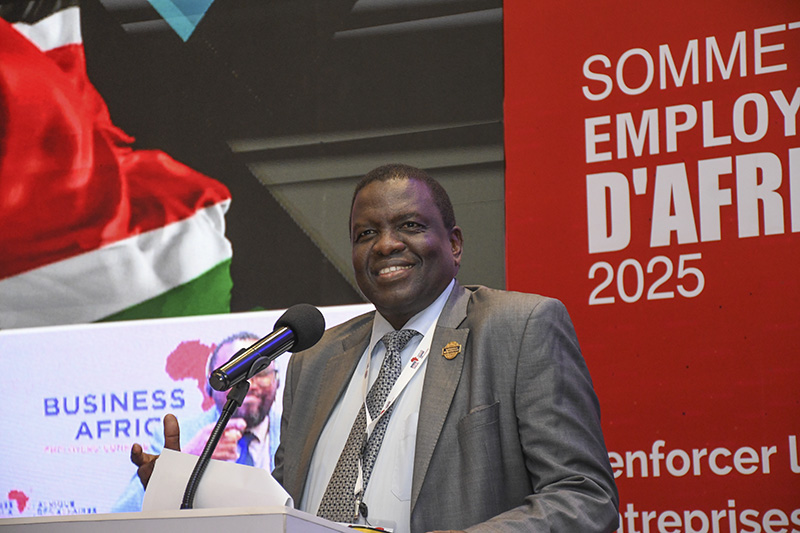
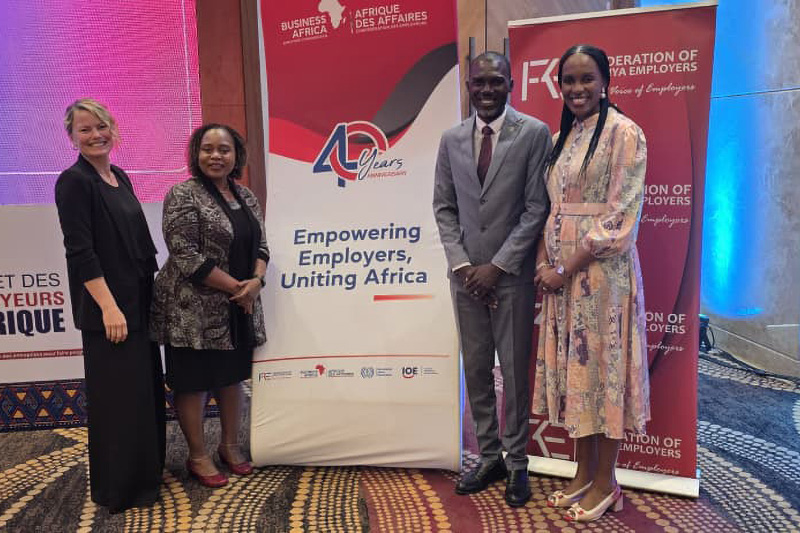
As an esteemed member of the International Organisation of Employers (IOE), we were delighted to participate in the Africa Employers Summit 2025 convened on 8th to 9th September 2025 in Nairobi Kenya. The summit was convened under the theme, ‘Empowering Business to Advance Social Justice’. Employers organisations, policy makers, business leaders and development partners were in attendance to discuss pertinent world of work issues.
The summit was a key platform to discuss aspects of decent work, enterprise growth, inclusive development and the future of work in Africa. Participants had the opportunity to discuss digitalisation, the gig economy and innovative organisational culture that are taking center stage in the labour market. The need to empower youth to contribute to economic transformation was emphasised.
In addition, the event consisted of insightful debates, impactful presentations and vibrant networking moments to foster collaboration at regional level for inclusive growth. It was also a celebration of 40 years of BUSINESS Africa as the continental voice of employers.
Therefore, Africa has a lot of untapped potential with a robust youth population that can transform the trajectory of continental economic growth. We believe public-private partnerships, entrepreneurship and skills developments will promote sustainable development.


THE WOMEN IN LEADERSHIP COURSE 2025

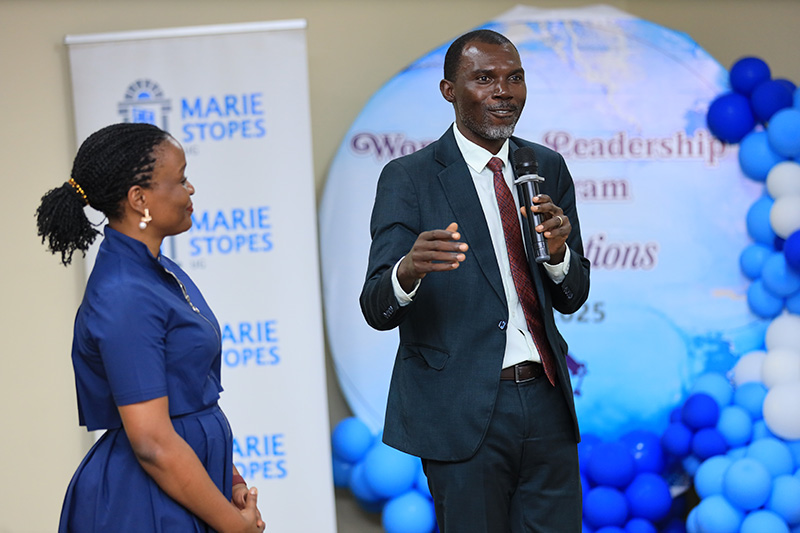
In a bid to achieve gender equality at the workplace, FUE offers capacity building courses and trainings to equip women with practical leadership skills to thrive in various leadership positions. FUE in partnership with Marie Stopes Uganda(MSU) conducted the Women in Leadership (WIL) Course that was conducted for three months. On Thursday 18th September, we were delighted to conduct the graduation of the 2025 cohort of the ladies that successfully completed the WIL course.
The graduation entailed a keynote address on transformative leadership, participant testimonials and awarding of certificates. The ladies were presented with networking opportunities aimed at strengthening bonds among graduates, mentors and organisational leaders. The WIL course was developed to promote women empowerment, foster business growth and develop an innovative work culture.
FUE is deliberate on promoting women empowerment at all levels including work, business and political spaces through various initiatives including the Female Future Leadership Course, Malkia and Annual Women Leadership Conference (AWLC).
To request a customised training suited to your organisation needs, contact Yusuf Nsubuga, the Training Manager, yusuf.nsubuga@fuemployers.org | info@fuemployers.org


Disability Inclusion Awareness Training

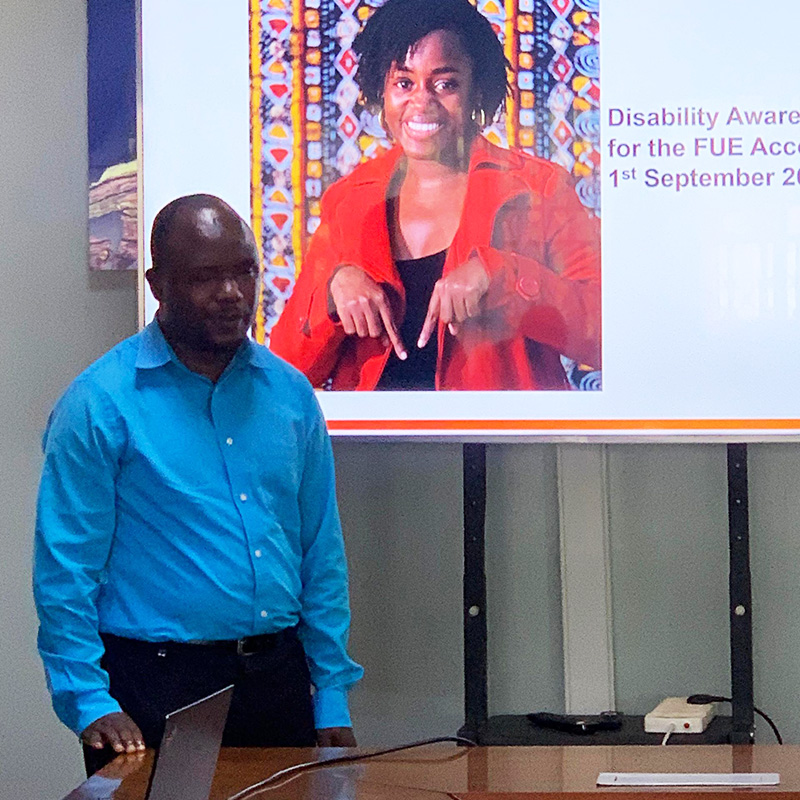
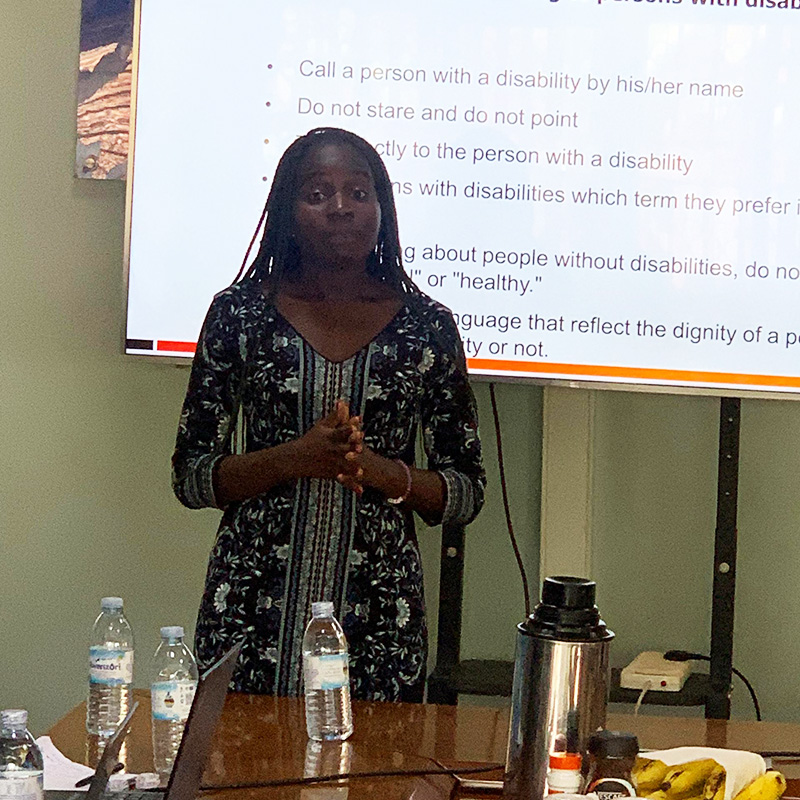
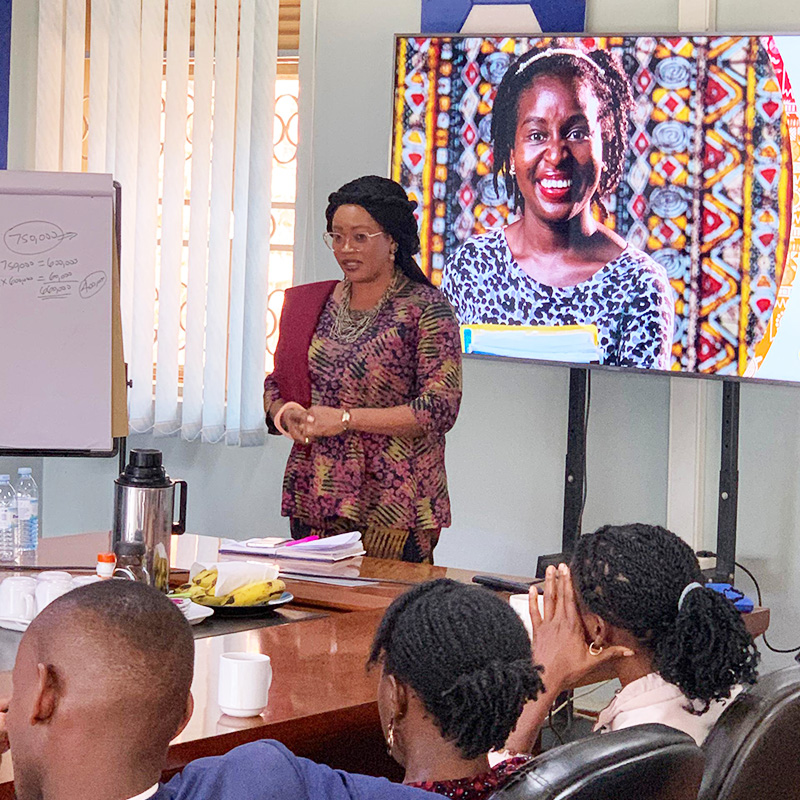
As the secretariat of the Uganda Business and Disability Network(UBDN), disability inclusion is a core part of our work in service to the Employers fraternity. On 1st September, our staff participated in an awareness training to promote disability inclusion at the workplace. The training was facilitated by our esteemed partner and member, Light for the World Uganda.
The training content included etiquette to address Persons with Disabilities (PwDs), cornerstones of inclusion and perspectives of viewing disability globally. The facilitators further discussed practical ways to promote disability inclusion in an organisation. Staff were encouraged to become ambassadors of disability inclusion as account managers by advocating for medical insurance, digital tools to ease work and creating a sense of belonging for PwDs to thrive in their different roles.
We provide free awareness trainings on disability inclusion, accessibility audits and reward outstanding organisations during the EYA Dinner. FUE remains committed to working with various stakeholders such as NUDIPU and Light for the World to promote disability inclusion at the workplace.
To join the UBDN, contact info@fuemployers.org | 0392 777 410
Anti-Sexual Harrassment at the Workplace Training

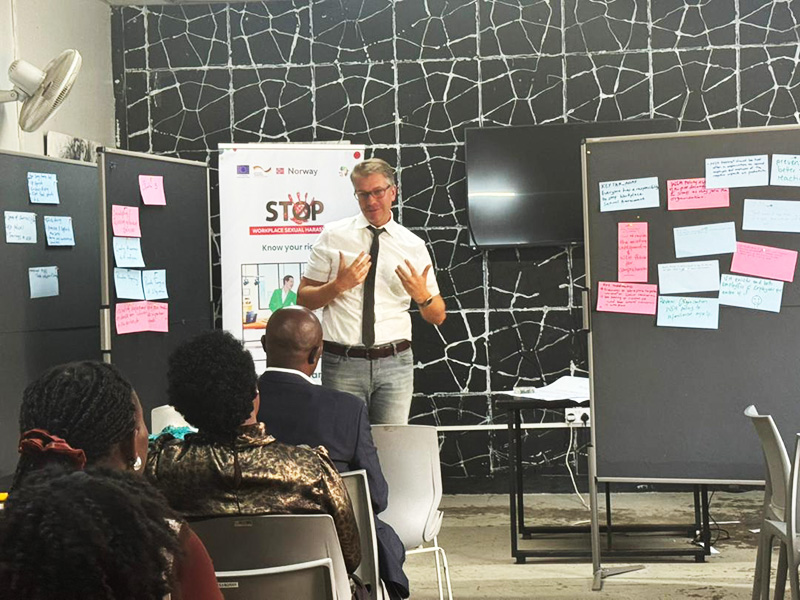
In 2023, Uganda became the 32nd country in the world and the 8th country in Africa to ratify ILO Convention 190 on violence and harassment in the world of work. On Wednesday 17th September, we participated in a training under the theme, ‘Stop Sexual Harrassment at Work’. The training conducted by GIZ Uganda with participant from Ministry of Gender, Labour and Social Development (MGLSD), GOPA, Pearl Dairies among others. The main purpose of the training was to create safe workplaces for all to thrive.
During the training, the facilitators shared detailed presentations on the misconceptions, myths and truths that surround sexual harassment at the workplace. Participants were enlightened on the key legal frameworks to promote employee wellbeing. Furthermore, practical solutions such as establishing confidential reporting structures, sensitizing staff on organisational policies on sexual harassment and protecting the workforce from retaliation.
Employers are encouraged to create a safe and healthy work environment for all to maximise productivity and boost business growth. We are readily available to provide support and guidance for organisations as well as trainings to build capacity to eliminate sexual harassment in the world of work.


FUE STAFF COMMENTARY
SUPPORT EMPLOYER-LED SKILLS DEVELOPMENT ENDEVOURS
On 27th January 2025, the President assented to the Technical Vocational Education and Training (TVET) Bill (2024) into an Act, which bill had earlier been passed by parliament in October 2024. This new TVET Act which commenced on 15th March 2025 promotes the employer-led skills development to address the existing problem of skills shortages and the unemployment challenges in the country so that the skills acquired from the TVET training are relevant to the labour market needs.
The process started with the formulation of the TVET Policy of 2019 which establishes an employer-led TVET system in Uganda – a system that is flexible to the changing labour market demands as the new policy direction. In addition, the policy provides for a structure to coordinate, regulate and harmonise TVET at all levels; the framework for resource mobilisation, utilisation and sustainability for quality TVET provision and delivery; the career path and linkages between general education and TVET, among others.

Generally, the Technical Vocational Education and Training system has undergone significant reforms which are aimed at aligning the country’s labour market needs (demand and supply of labour) and in promoting employability. In this regard, the TVET Act is such a significant milestone in reforming the TVET sector. Some of the key reforms introduced by the new TVET Act 2025 include:
- First, the TVET Act has repealed the Business, Technical, Vocational Education and Training Act, Cap. 244; The Management Training and Advisory Centre Act, Cap. 253; The Hotel and Tourism Training Institute Act, Cap. 249; and The Uganda Wildlife Research and Training Institute Act, Cap. 261; and for related matters.
- Secondly, Section 4 of the TVET Act establishes the TVET Council as a Statutory body to accredit TVET institutions, oversee and regulate the TVET delivery to ensure quality training delivery and accountability. Section 7 of the same Act provides for the Independence of the TVET Council, as it states: “Subject to this Act, the Council shall exercise its functions independent of any person or body”. As regards the composition of the TVET Council, Section 8 (2) states: “The Minister shall, while appointing the members under subsection (1), appoint at least two-thirds of the members from employers, including the Chairperson”.
- Thirdly, Section 25 provides for Sector Skills Expert Committee, and Subsection (1) of the same Section states: “The Council shall form such number of Sector Skills Expert Committees as may be necessary to provide information on the labour market that may inform the development of training packages and curricula”. On the composition of this Sector Skills Expert Committee, Section 26 (2) states: The Council shall appoint the Chairperson and other members of the Sector Skills Expert Committee from the practitioners in the relevant industry or sector”.
- Fourth, Section 28 provides for the Development of the TVET Qualifications Framework. Thus, Subsection (1) of the same Section states: “The Council shall, with the approval of the Minister, develop the TVET qualifications framework”. And Subsection (2) of the same Section states: “The Council shall harmonise the TVET qualifications framework with the national, regional, continental and global TVET qualifications frameworks”.
- Also, Section 77 (1) provides for the Establishment of two TVET Assessment Boards. Thus, Subsection (3) of the same Section states: “The Uganda Business and Technical Examinations Board and the Directorate of Industrial Training in existence at the commencement of this Act, shall be merged to form the Uganda Vocational and Technical Assessment Board”. The Uganda Vocational and Technical Assessment Board (UVTAB) shall be the assessment board responsible for assessment and certification of competences obtained through formal and informal technical and vocational education and training.
- Similarly, Subsection (4) of Section 77 states: “The Uganda Allied Heath Examinations Board and Uganda Nurses and Midwives Examination Board in existence at the commencement of this Act, shall be merged to form the Uganda Health Professions Assessment Board”. The Uganda Health Professions Assessment Board (UHPAB) shall be the assessment board responsible for the assessment and certification of health professionals under technical and vocational education and training.
- In addition, Section 95 (1) provides for the Development of TVET curriculum. It states: “The TVET Assessment Board established under section 77 shall develop and manage the TVET curricula in consultation with the Sector Skills Expert Committees, TVET providers and with the approval of the TVET Council”.
- Last but not least, Sections 109 provides for the of Establishment of the Skills Development Fund, and Section 110 provides for the finances of the Skills Development Funds which consist of the following:
(a) monies appropriated by Parliament for the purposes of the Skills Development Fund to fund the priority approved training as the Council may determine;
(b) a levy on the gross annual revenue of a TVET provider generated from training with production at rate of ten percent;
(c) skills development levy prescribed under section 111 of the Act;
(d) revenue or assets received by the Fund in the performance of its functions under this Act;
(e) grants, monies or assets donated to the Skills Development Fund; and
(f) money received by the Skills Development Fund by way of voluntary contributions. - In addition, Section 111 (1) states: “There is imposed a skills development levy on an employer, who has in employment, at least five employees payable on monthly basis to the Skills Development Fund”. Subsection (2) of the same Section further states: “The levy referred to in subsection (1) shall be a sum of money equal to one percent of the total gross monthly emoluments payable by the employer to the employees in respect of each month”.
For long, there has been a problem of skills mismatch and shortages in the labour market in Uganda which emanates from the poor coordination between the training institutions and the private sector (employers) in terms of the type and quality of skills that should be provided in the labour market. This, coupled with country’s academic oriented colonial education system with limited room for acquisition of employable skills has been an issue of great concern to employers. However, with the new TVET reforms as indicated above, employers have a greater role in shaping the skills development system to ensure the training is relevant to their (industry) needs.
Therefore, the new employer-led TVET system and the employer-led skills development process is a positive development, and one of the greatest milestones in the journey to re-define and reposition the country’s education system. The ball has been set rolling in our courts as employers. Let’s embrace, promote and support the new TVET direction so that we are able to have the right type and quality of skills in the labour market. This is one of the solutions for minimising the cost of doing business and for the creation of more jobs.
By Patrick Ajuna, Policy and Research Officer
UPCOMING EVENTS
[wpcdt-countdown id=”4351″]
[wpcdt-countdown id=”3113″]

[wpcdt-countdown id=”4455″]