The project aims to improve employment relations and workforce capabilities across Uganda specifically targeting the sugar and coffee sectors by introducing alternative dispute resolution, addressing gender inequalities, and implementing modern vocational training frameworks.
The initiative addresses critical issues such as the major case backlog in the Industrial Court (which operates with only two judges nationwide) and low-paying, policy-deficient conditions for workers in agricultural supply chains.
The 3 Core Project Components
1. Social Dialogue (Alternative Dispute Resolution - ADR)
• Objective: Establish cheaper, faster, non-litigious mechanisms to resolve workplace disputes and ease burden on the Industrial Court.
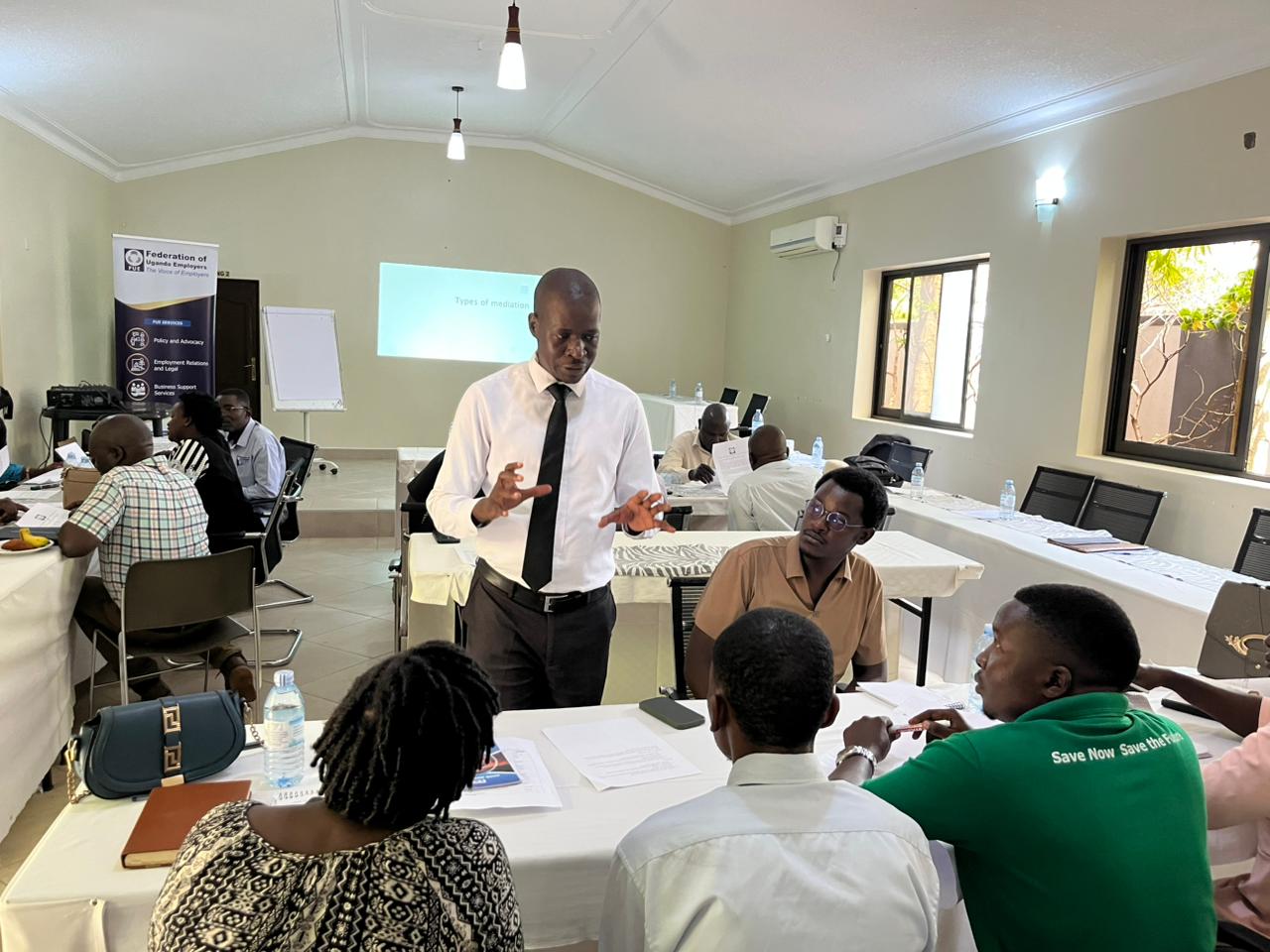
• Activities & Impact: Held dialogue engagements with 20 ADR representatives across four regions (Kasese, Lira, Gulu, and Mbale) and conducted Training of Trainers (ToTs) with the National Organisation of Trade Unions (NOTU) to ensure scalable, long-term dispute management skills.
2. Gender Equality & Human Rights
• Objective: Identify and address systemic gender gaps, human rights concerns, and workplace issues affecting vulnerable low-wage workers (especially women) in the sugar and coffee sectors.
• Activities & Impact: Developed a specialized Gender Audit Tool, validated it through multi-stakeholder workshops in Jinja and Hoima, and trained designated company personnel on collecting data, analyzing results, and creating actionable gender-diversity plans.
3. Skills Development & Dual Learning
• Objective: Build a robust TVET (Technical and Vocational Education and Training) dual-placement ecosystem using the Danish Industry (DI) approach.
• Activities & Impact: Identified and oriented 23 companies and 3 TVET institutions (focusing initially on metal fabrication and welding within steel industries) to adopt practical, workplace-integrated dual-learning models.